null

Go Kart Keys to Success

GoKartMasters New Owner Academy

Go-Kart Keys to Success

Most go-kart problems do not begin as major failures. They begin as a new noise, a loose fastener, a dry chain, old gasoline or a machine that simply feels different. These ten habits help families catch small concerns before they become expensive repairs.

The most important rule

PAY ATTENTION.

Learn how your kart normally looks, sounds and feels. Familiarity makes it much easier to recognize a change while it is still small.

At a glance

The habits that keep family machines ready to ride

Fresh fuelPremium, preferably ethanol-free, with stabilizer.
Correct oilSynthetic 10W-30, checked with the dipstick.
Clean airInspect the air filter often. Dirt can destroy an engine.
Regular inspectionLook, listen and feel before every ride.

Key 1

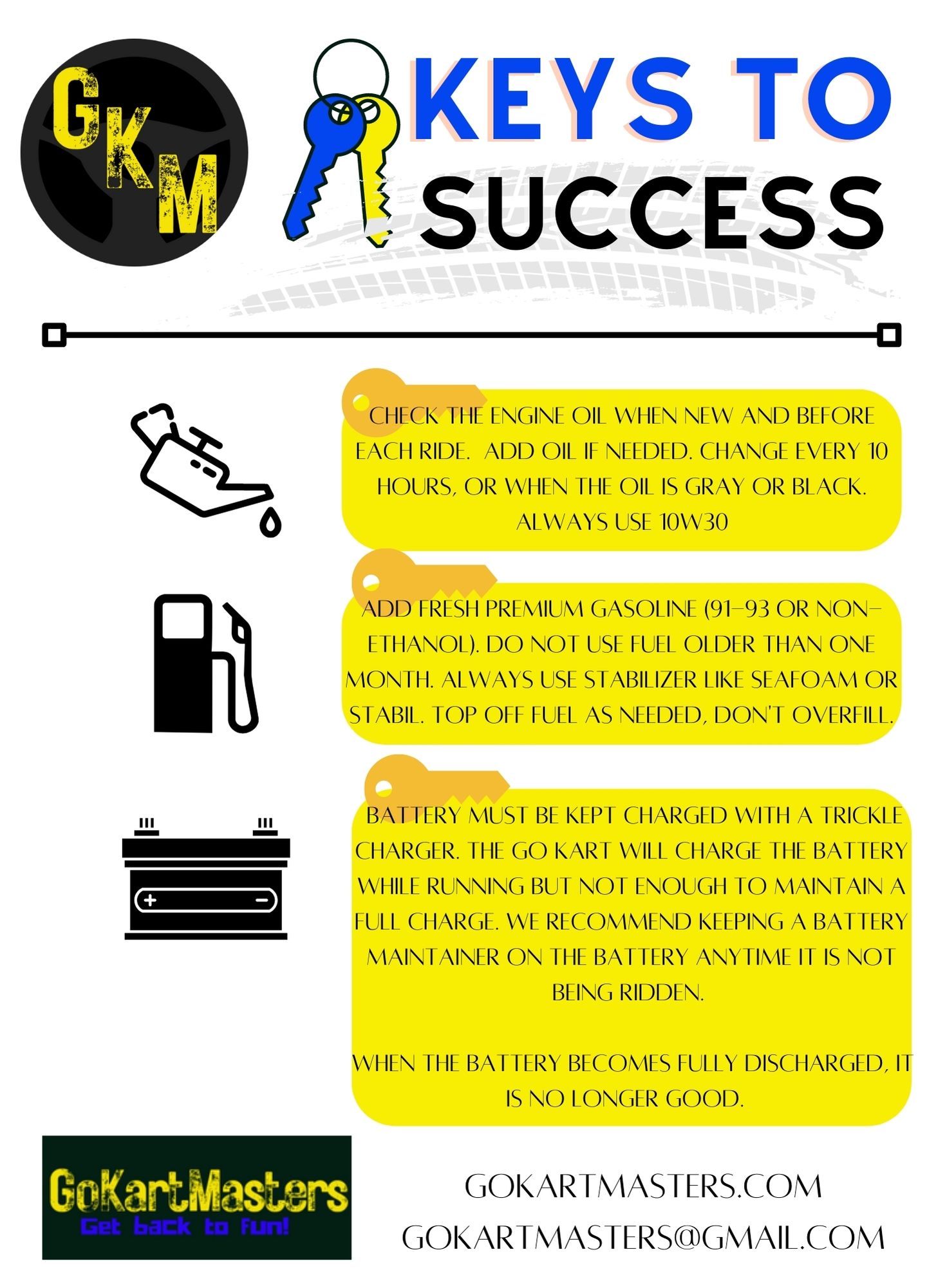
Check the engine oil

Check the level before the first start and before every ride. Rest the dipstick on the threads without screwing it in, then add oil only until the dipstick shows the correct level.

  • Always use 10W-30; GoKartMasters recommends synthetic.
  • All current karts require one quart or less. The dipstick is the best gauge.
  • Change the break-in oil at five hours, then service around every 20 hours or once a year, whichever comes first.
Never add oil to the gearbox. TrailMaster gearboxes arrive lubricated. Overfilling can blow out the gaskets.

Key 2

Use clean, fresh gasoline

Use premium gasoline and choose ethanol-free fuel whenever it is available. Regular gasoline will run, but premium ethanol-free fuel is the better choice for small engines.

  • Add a quality fuel stabilizer to every tank.
  • Treat gasoline more than two months old as stale.
  • Keep dirt away from the fuel-tank opening.
  • Do not pour the final splash from the bottom of a fuel can into the kart. Water and debris settle there.

Turning the fuel valves off after riding is a helpful habit, but it does not remove the gasoline already inside the lines and carburetor.

Key 3

Protect the engine from dirt

Inspect the air filter often and before every ride in dusty conditions. Replace it when it is dirty, damaged or oil-soaked.

Dirt inside an engine is catastrophic. A neglected filter or loose intake connection can shorten engine life far faster than most owners expect. Check the filter, intake boot and clamps regularly.

Key 4

Keep the battery maintained

A go-kart charging system helps while the engine is running, but it is not designed to recover or maintain a deeply discharged battery.

  • Install a pigtail and connect a quality 12-volt maintainer whenever the machine is parked.
  • GoKartMasters recommends a NOCO-style automatic trickle charger or maintainer.
  • Check that the terminals remain clean, tight and correctly connected.

Key 5

Inspect before every ride

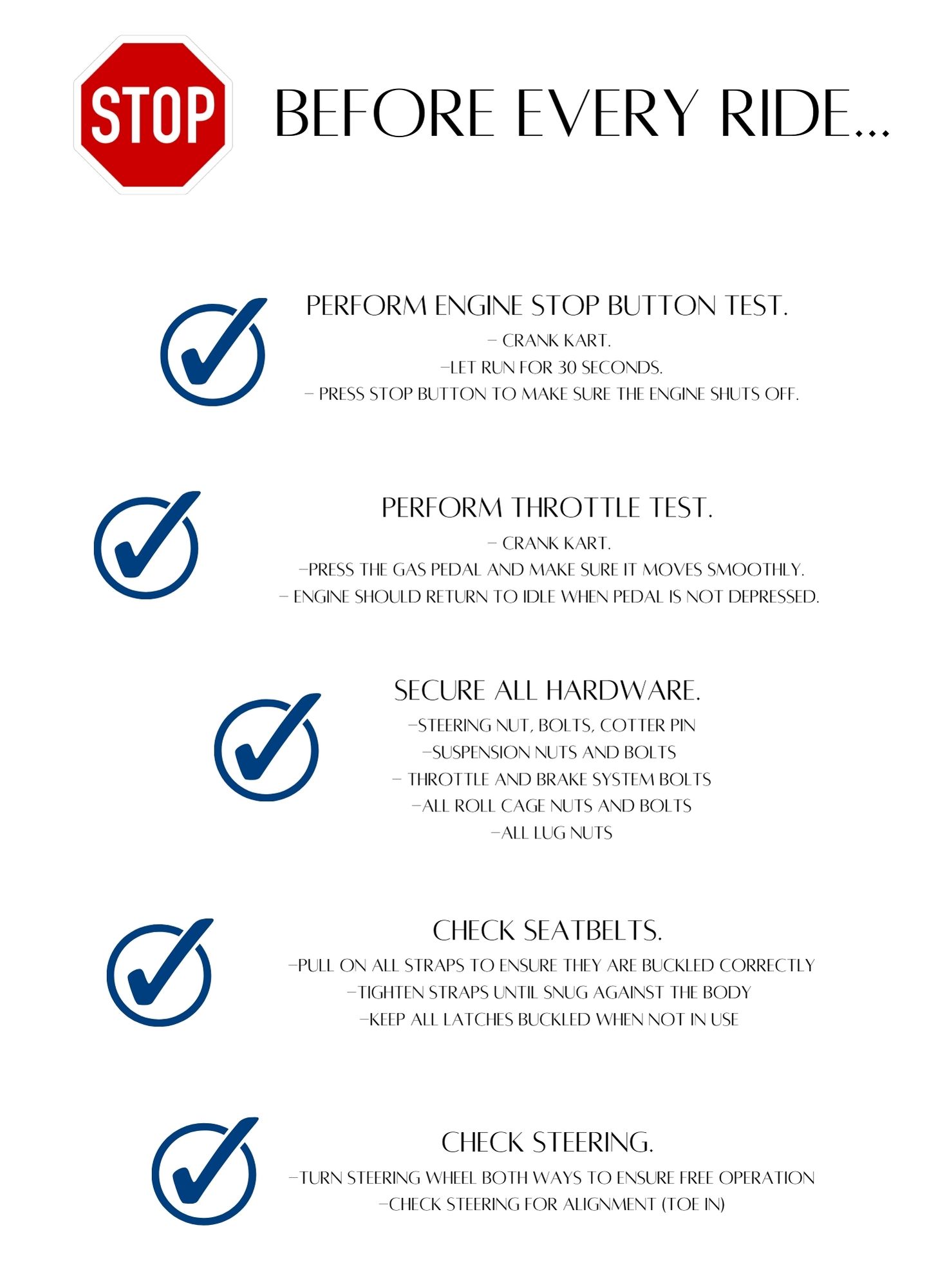
Before starting, inspect the brakes, throttle, steering, wheels, tires, chain, fuel system, hardware, restraints and safety controls. After starting, verify that the throttle returns to idle and perform a quick brake check at very low speed.

Use the complete pre-drive checklist

Key 6

Adjust and lubricate the chain

A properly adjusted chain should have approximately 1/4 to 1/2 inch of movement. It should have very little slack, but it should never be pulled completely tight.

  • During the first few hours, check it about once per hour until it stops stretching.
  • Lubricate it with chain-and-cable lubricant.
  • Recheck it after muddy rides or washing.

Popping, loss of power or a chain that repeatedly comes off can indicate incorrect tension or alignment.

Key 7

Complete the five-hour service

The first five hours are a bedding-in period for the engine, chain, hardware, brakes and controls. Normal family riding is appropriate; simply pay attention to the machine.

At five hours, replace the break-in oil and inspect the complete kart. Tighten hardware after the first hour or two, keep the chain adjusted and address anything that has changed.

Open the break-in and first-service guide

Key 8

Use the right safety gear

Every driver and passenger should wear a properly fitted DOT-compliant full-face motorcycle helmet and closed-toe shoes. Goggles are recommended. Bicycle, football and novelty helmets are not appropriate riding helmets.

Read the helmet and riding-gear guide

Key 9

Wash carefully, then dry and lubricate

Mud acts like liquid sandpaper around chains, sprockets, brakes and seals, but excessive washing can create its own problems. Remove mud promptly, keep high-pressure water away from bearings, seals, the engine, air intake, muffler and belt vents, and lubricate the chain after washing.

Key 10

Prepare it before storage

Fuel left sitting in a small-engine fuel system is one of the most common causes of future starting and running problems.

  • If a carbureted machine will sit for several weeks, drain the fuel and run the engine until it dies so the remaining gasoline is removed from the carburetor.
  • Connect the battery maintainer.
  • Clean and dry the kart before putting it away.
  • Store it where rodents, moisture and weather cannot damage wiring, upholstery or the intake system.

EFI machines use a different pressurized fuel system. Follow the storage procedure for the exact model rather than treating it like a carburetor.

GoKartMasters Field Notes

Your kart will usually warn you

After decades of working on go-karts, our best advice is simple: pay attention.

Look over the machine every time. Listen to it start, idle and take off. Feel how the steering, brakes and throttle normally respond. A new rattle, smell, vibration, leak, hesitation or change in performance deserves attention. Families do not need to become master mechanics; they need to become familiar with their own machine.

Stop and inspect

These are not normal break-in behavior

Soft or ineffective brakes
Throttle that does not return
Fuel or brake-fluid leaks
Binding steering or loose parts
Grinding or metal noises
Severe vibration or repeated chain loss
Kart that will not move
Overheating or EFI warnings

When you need help

Concerned, unsure or afraid to keep testing?

Stop and ask. Text GoKartMasters at 605-368-1612. Include your name, order number, exact model, a description of what happened, steps already attempted, and useful photos or a short video.

Contact GoKartMasters

Frequently asked questions

Quick answers for new owners

How often should I service my go-kart?

Complete the first service at five hours. After that, service it around every 20 hours or once a year, whichever comes first. Dust, mud and hard use may require more frequent inspection.

Should I shut off the fuel valves after riding?

It is a good habit and can prevent some problems, but gasoline remains inside the fuel lines and carburetor. It is not a substitute for proper storage preparation.

Can I pressure-wash my go-kart?

Use restraint. Keep a pressure-washer wand at least three feet away and avoid directing pressure at bearings, seals, the engine, intake, muffler and belt vents. Dry the kart and lubricate the chain afterward.

What is the easiest way to prevent expensive repairs?

Pay attention. Check oil and air filtration, use good fuel, maintain the battery and learn what your machine normally looks, sounds and feels like.

Continue learning

Related New Owner Academy guides

GoKartMasters owner guidance is based on decades of hands-on experience selling, assembling, riding and supporting family powersports equipment. Always follow the instructions for your exact model. Reviewed August 2026.

best warranty on trailmaster go karts